
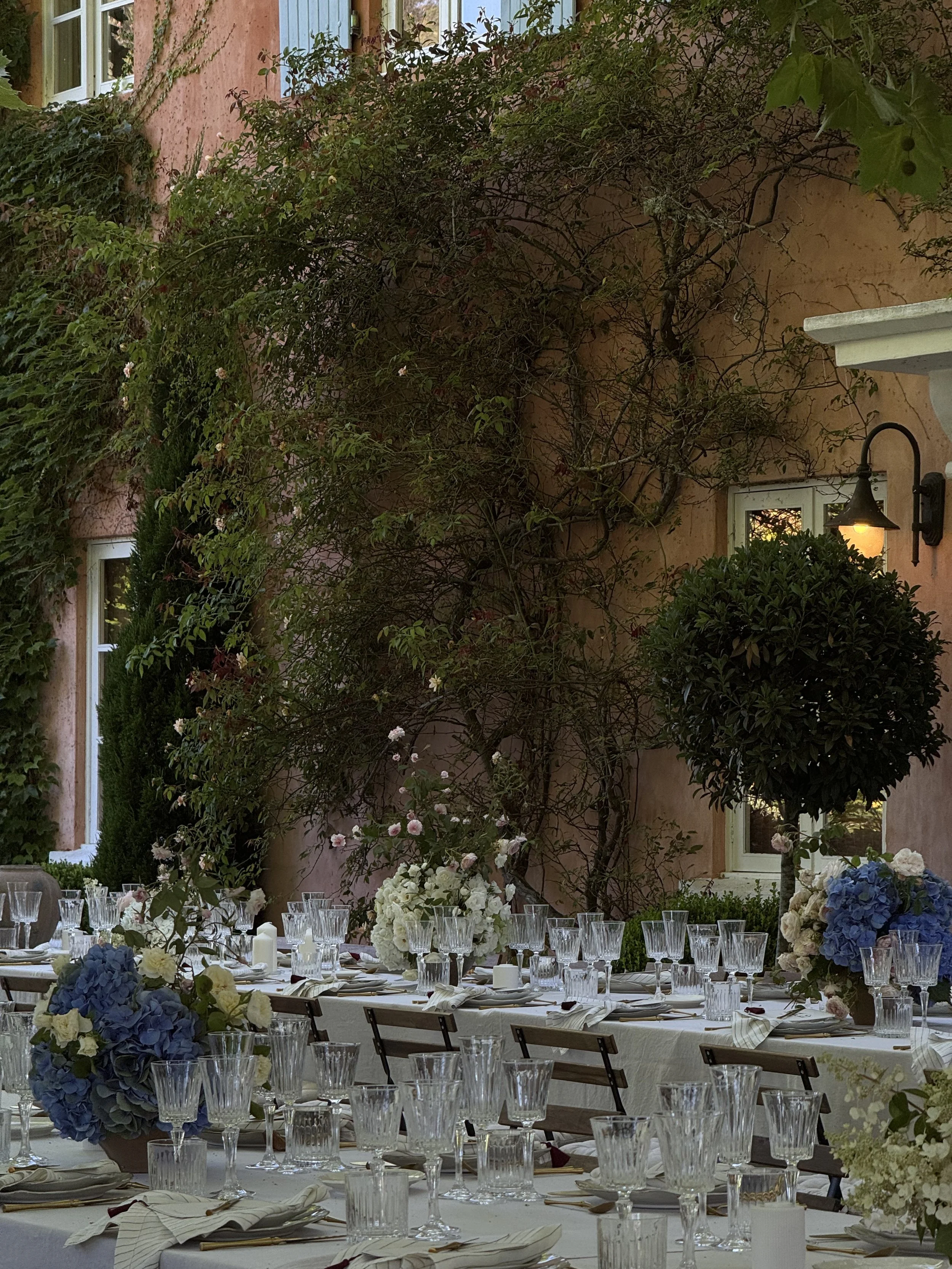


A Guide to Seasonal Wedding Flowers in Australia
One of the first questions I ask a couple is their wedding date. Not for logistics, although that matters too, but because the date tells me almost everything about what your flowers should look like.
Australia’s growing seasons run opposite to the Northern Hemisphere, and they shape both the look and the cost of your florals more than most people realise. Designing with the season, rather than against it, is usually the difference between a beautiful, abundant result and an expensive, compromised one.
Here’s what’s actually available, season by season.
Spring (September to November)
Spring is when the growing year properly switches on, and the variety on offer reflects that. This is peak season for David Austin and garden roses, peonies, ranunculus, sweet pea, lisianthus, stock, jasmine, lily of the valley, and Australian natives like waratah. Colours tend toward soft pastels, fresh whites, and clear, bright tones, which suits the romantic, garden-style palettes so many couples gravitate toward.
If peonies are non-negotiable for you, spring (particularly October and into early November) is genuinely the best window to plan around. Outside that window, peonies are either unavailable or significantly more expensive to import.
Summer (December to February)
Summer brings bold, abundant blooms and some of the best native flowers of the year. Think hydrangea, dahlias starting to come through, orchids, and a strong run of Australian natives in full bloom. It’s also peak wedding season in much of the country, so booking your florist (and your venue) early matters more than usual.
Summer palettes can lean tropical and saturated, or stay soft and textural depending on how natives are used. Heat is a genuine design consideration here too. Anything destined for an outdoor ceremony in the middle of the day needs to be chosen, and conditioned, with that in mind.
Autumn (March to May)
Autumn is, in my view, one of the most underrated seasons for wedding flowers in Australia. Tulips, dahlias, chrysanthemums, garden roses, calla lilies, camellias, and a beautiful spread of Australian natives all come into their own. The light softens, and rich, warm tones (rust, burgundy, deep plum, warm cream) feel completely at home.
Autumn palettes can eb’ and flow between moody bold colour combo’s to fun bright contrasting elements.
Winter (June to August)
Winter has fewer varieties available, but what’s in season tends to have real presence: ranunculus, chrysanthemums, cymbidium orchids, sweet pea, and magnolia all hold up well through the cooler months. Because the palette is more restrained, winter weddings often lean into texture, structure, and contrast rather than sheer abundance, which can read as more sophisticated and more considered.
Cymbidium orchids in particular are a winter signature in Australia and make a striking, elegant choice for bouquets and installations alike.
Why This Actually Matters for Your Budget
Flowers that are in season cost less because they don’t need to be imported, forced, or sourced from limited overseas supply. They also tend to be fresher and longer-lasting, since they haven’t travelled as far to reach you.
This doesn’t mean your palette is locked to whatever is growing at the time. A skilled florist designs within the season while still delivering the mood, colour story, and feeling you’re after. If there’s one flower you’ve set your heart on that falls outside your date’s season, it’s worth a conversation early, since there’s usually a way to either source it thoughtfully or find something just as striking that’s actually available.
Plan With the Season, Not Against It
Knowing your wedding season before your first florist consultation means you’ll get more accurate guidance, a more realistic budget conversation, and a result that feels effortless rather than forced.
If you’d like to talk through what’s in season for your date and what that could look like for your day, we’d love to hear from you.
Inside a Wedding Floral Installation: What Actually Happens on the Day
Guests arrive to a finished space. A ceremony arch in full bloom, a reception room transformed, tables set exactly as they were imagined months earlier. What they don’t see is everything that happened to get there, often starting before the sun comes up and finishing well after the last guest has gone home.
Here is what a wedding floral installation actually looks like from the inside.
The Week Before
The work begins long before the wedding day itself. Flowers are ordered from growers and wholesalers based on what will be at its best on the date, not simply what’s pretty in a catalogue. For a large-scale install, this can mean coordinating dozens of varieties and quantities, timed so that nothing opens too early or arrives too tight.
Coolroom space gets booked. Vehicles get organised. A run sheet is built hour by hour, because on installation day there is no room for guesswork.
Two to Three Days Out
Flowers start arriving and the conditioning process begins: trimming stems, removing damaged foliage, and giving each variety the right water temperature and rest time to open at the correct pace. Hardy textural elements might be prepped first, while delicate blooms are held back so they peak exactly on the day, not before it.
This stage is invisible to almost everyone, and it’s also where a large share of the final result is actually decided.
The Morning Of
For a significant install, the day often starts before dawn. Vehicles are loaded in a specific order, because what goes in last needs to come out first. Structures, vessels, and mechanics arrive at the venue ahead of the flowers themselves, so that by the time the blooms are unloaded, there is already a frame ready to receive them.
A typical large installation might involve a base structure (steel, timber, or a hired frame) being built and secured first. Floristry then gets layered onto that structure piece by piece: greenery first to establish shape and movement, then focal blooms placed with intention, then smaller textural elements woven through to soften any gaps. For a ceremony arch or a floral wall, this can take a small team several hours of continuous, hands-on work.
Reading the Room as You Go
No installation goes exactly to plan, and a good florist designs for that. Light changes throughout the morning. A structure might sit slightly differently in person than it did on paper. Flowers that looked perfect at the warehouse might need adjusting once they’re seen against the actual venue. Part of the job is making real-time calls, stepping back constantly to check scale, balance, and how the piece will actually read to a guest walking past it, not just how it looks up close.
The Final Pass
In the last hour before guests arrive, the focus shifts to detail: removing any wilting or bruised petals, double-checking water levels in vessels and floral foam, confirming nothing has shifted during setup, and doing a final walk-through of every space that will be seen. This is also when smaller, more delicate elements (think bridal bouquet, buttonholes, and any blooms that can’t survive sitting out for hours) are finished and handed off.
Pack-Down
The visible part of the job ends when guests arrive, but the work isn’t finished. Once the reception is well underway, or sometimes the following morning depending on the venue, everything comes down. Hired structures, vessels, and equipment are returned. Flowers that can be repurposed (for an after-party, a thank-you delivery, or a donation) often are. Venues need to be left exactly as they were found, which is its own quiet, unglamorous task at the end of a very long day.
Why It Matters to Know This
Understanding what actually goes into a floral installation changes how you think about both the investment and the trust involved. You are not paying for an afternoon of arranging. You are paying for sourcing expertise, design judgement, physical labour, logistics, and a team willing to start before dawn and finish well after dark so that for a few hours, your space looks effortless.
If you’re picturing something ambitious for your own day and want to talk through what it would actually take to bring it to life, we’d love to hear from you.
How to Choose Your Wedding Florist: What to Ask, What to Look For
Most couples start their florist search the same way: scrolling Instagram, saving images to a Pinterest board, and reaching out to whoever’s work stops them mid-scroll. That’s a reasonable place to start. It is not, on its own, a reasonable place to finish.
A portfolio tells you what a florist can produce when conditions are ideal. It tells you almost nothing about whether they’ll be the right person to trust with your actual wedding day, your actual budget, and your actual venue. Here is what I’d be asking if I were the one doing the choosing.
Look Past the Portfolio
Anyone can curate a feed of their best work. What you want to know is whether that quality is consistent, or whether you’re looking at the best five weddings out of fifty.
Ask to see a recent, real wedding from start to finish, not just the hero shots. A florist confident in their consistency will happily walk you through it. Look for variety too: different venues, different colour palettes, different scales. A portfolio full of near-identical arrangements might mean a florist has one strong idea rather than a genuine design process.
Ask How They Work, Not Just What They Make
The best florists can describe their process as clearly as they can show their results. Ask how a consultation works, how a quote comes together, and how many revisions are included before anything is locked in. Ask who will actually be on-site on your wedding day. Some studios book the work and send a team you’ll never meet; others, including ours, have the lead designer present for every install.
Neither approach is automatically wrong, but you should know which one you’re getting before you sign anything.
Understand What’s Actually Included
This is where most disappointment comes from, and it’s almost always avoidable. A quote can look generous until you discover that vessels, stands, an arch structure, or delivery and pack-down are all separate line items.
Ask directly: is this quote inclusive of GST? Does it include hire items, or are those quoted separately? Is setup and pull-down included, or charged by the hour? A florist who answers these questions plainly, without hedging, is one who runs their business properly. Vagueness at this stage tends to predict vagueness later.
Ask About Sourcing
Where your flowers come from affects both quality and cost. A florist who works with local growers and trusted wholesalers, and who designs around what’s seasonally available, will generally deliver better quality for the same spend than one who tries to force out-of-season or imported stems into every brief.
It’s worth asking what’s in season around your wedding date, and whether your florist is willing to let that guide the palette. The ones who say yes are usually the ones who care more about the result than the request.
Gauge How They Handle Your Brief
A good florist listens before they pitch. If your first conversation is mostly them talking about their own aesthetic rather than asking about yours, that’s worth noting. Florals at their best are a collaboration: your vision, shaped by their expertise.
Pay attention to whether they ask about your venue, your colour preferences, the feeling you want the day to have, and any non-negotiables. A considered designer will ask more questions than they answer in a first consultation.
Check the Logistics Fit
Not every florist travels well, and not every florist wants to. If your venue is remote, or your day involves a ceremony in one location and a reception in another, ask how they’ve handled that before. Coolroom hire, vehicle logistics, and timing between locations all need a confident answer, not an improvised one.
Trust the Contract, Not Just the Conversation
Once you’ve found someone you like, get everything in writing: what’s included, what’s excluded, the payment schedule, the cancellation terms, and what happens if a specific flower variety isn’t available closer to the date. A florist who is happy to put detail into a contract is one who has done this enough times to know exactly what needs protecting, on both sides.
The Short Version
Look past the prettiest photo. Ask about process, inclusions, sourcing, and logistics before you ask about price. The right florist will welcome every one of these questions, because they’ve answered them many times before and know that clarity now means a far better experience later.
If you’re in the process of shortlisting florists and want an honest conversation about whether we’re the right fit for your day, we’d love to hear from you.
What Do Wedding Flowers Actually Cost? A Luxury Florist’s Honest Answer
Of all the conversations I have with couples, the one that comes up most and matters most is the one about budget.
Not because money is the point. But because florals are one of the most misunderstood items on a wedding budget, and when expectations and reality don’t align, couples end up either underwhelmed by what they receive or blindsided by what it costs. Neither is acceptable.
So here is an honest, considered answer to the question I’m asked most: what do wedding flowers actually cost in Australia?
WHY THE NUMBERS VARY SO MUCH
Before anything else, it’s worth understanding why two florists can quote such wildly different figures for what appears to be a similar brief. The difference almost always comes down to one of four things.
SOURCING.
Not all flowers are created equal, and they are not priced equally either. Seasonal, locally grown blooms cost less and often carry a beautiful quality that comes from not travelling across the country in a cold box. Imported varieties, rare species, and out-of-season requests all increase cost. A florist who sources thoughtfully, who has relationships with growers and trusted wholesalers, will be able to do more with your budget than one who doesn’t.
LABOUR.
What you see on the day represents a fraction of the actual hours involved. There is design time, sourcing, conditioning, florals that need to open at exactly the right pace, transport logistics, installation, and pack-down. For a considered commission, the work behind the scenes often eclipses the time spent in your venue.
LOGISTICS.
Travel, coolroom hire, and equipment are all real costs that responsible florists factor transparently into your quote. If a quote seems unusually low, it’s worth asking what’s included.
SCALE AND INTENT.
A bridal bouquet is one thing. A ceremony arch, twenty reception centrepieces, a floral chandelier, and welcome table arrangements are another. The scope of your vision determines the scope of the investment.
WHAT TO EXPECT AT DIFFERENT INVESTMENT LEVELS
Every florist structures their offering differently, but broadly speaking, here is what your budget makes possible in Australia right now.
$2,000 – $4,000
This range suits intimate celebrations, elopements, or couples who want florals for a select few moments, such as a bouquet, a buttonhole, or perhaps a small arrangement for the ceremony table. At this level, your florist will likely work within a tighter palette of seasonal and accessible varieties. It can be done beautifully, but it requires clarity about what matters most and a willingness to leave some things out.
$5,000 – $8,000
A more considered commission becomes possible here. More elements, more flexibility with variety, and the beginning of a genuine design conversation. You might have ceremony florals, a statement centrepiece or two, and some thoughtful touches for the reception. Trade-offs will still need to be made, but there is room for intention.
$8,800 AND ABOVE
This is where florals stop being decorative and start being defining. At this level, a design-led florist can source premium varieties, create large-scale installations, and bring a genuine creative vision to every element of your day, from the first arrangement your guests see to the final table they sit at. It is the level at which the work becomes a true reflection of the couple, the space, and the atmosphere you’ve set out to create.
At The Abstract Florist, our wedding commissions begin from $8,800 (inc. GST) for celebrations across NSW, Sydney, and Australia. This reflects the sourcing, the design hours, and the standard of execution we bring to every commission.
WHAT COUPLES OFTEN FORGET TO ACCOUNT FOR
Even when the floral investment is clear, a few things tend to catch couples off guard.
HIRE ITEMS.
Vessels, arches, candle holders, and stands are often a separate line, either provided by the florist or sourced externally. Always confirm what’s included in your quote and what’s not.
GST. It sounds simple, but confirm upfront whether quotes are GST-inclusive. At higher investment levels, the difference matters.
TRAVEL AND LOGISTICS.
For destination weddings, or venues beyond a florist’s home base, travel and accommodation costs are often factored into a logistics line within the quote. Ask about this early.
LAST-MINUTE ADDITIONS.
Weddings evolve. Couples add elements, adjust the brief, fall in love with something they hadn’t planned for. Budget a small contingency, as it almost always gets used.
HOW TO GET THE MOST FROM YOUR FLORAL INVESTMENT
The most important thing you can do is be honest, with yourself and with your florist, about what matters most. Identify your non-negotiables. Is it the ceremony arch? The bridal bouquet? The reception centrepieces? When you know what you can’t live without, a skilled florist can build around those priorities and make considered decisions about where to pull back.
Lean into seasonality. A florist who knows what’s growing right now, who has relationships with growers, and who understands the rhythm of the market will always deliver more for your money than one who sources reactively. Trust their expertise.
Prioritise the spaces where your guests spend the most time. A stunning ceremony installation is seen for twenty minutes. A reception your guests sit inside for three hours is worth the investment.
And finally, invest in what photographs. Florals exist in memory as much as in reality, and the images from your wedding will last long after the blooms have faded.
If you’re beginning to map your wedding budget and wondering whether we might be the right fit, we’d love to hear from you. You can learn more about our process and enquire here.
The Abstract Florist is a luxury wedding and event florist based in NSW, available across Sydney, Australia, and internationally. Our wedding commissions begin from $8,800 (inc. GST).